

The practical answer
Document the workflow's trigger, finished state, owners, states, decisions and exception paths before choosing a platform. Automate deterministic rules first, keep ambiguous judgment explicit, and design retries and failure ownership as part of the happy path.
The operating question
Automation inherits the structure of the process it is applied to. If the workflow is ambiguous, an automation platform usually makes that ambiguity execute faster. The audit should therefore describe the real operating model before it describes the tool.
Write the trigger and finished state in plain language
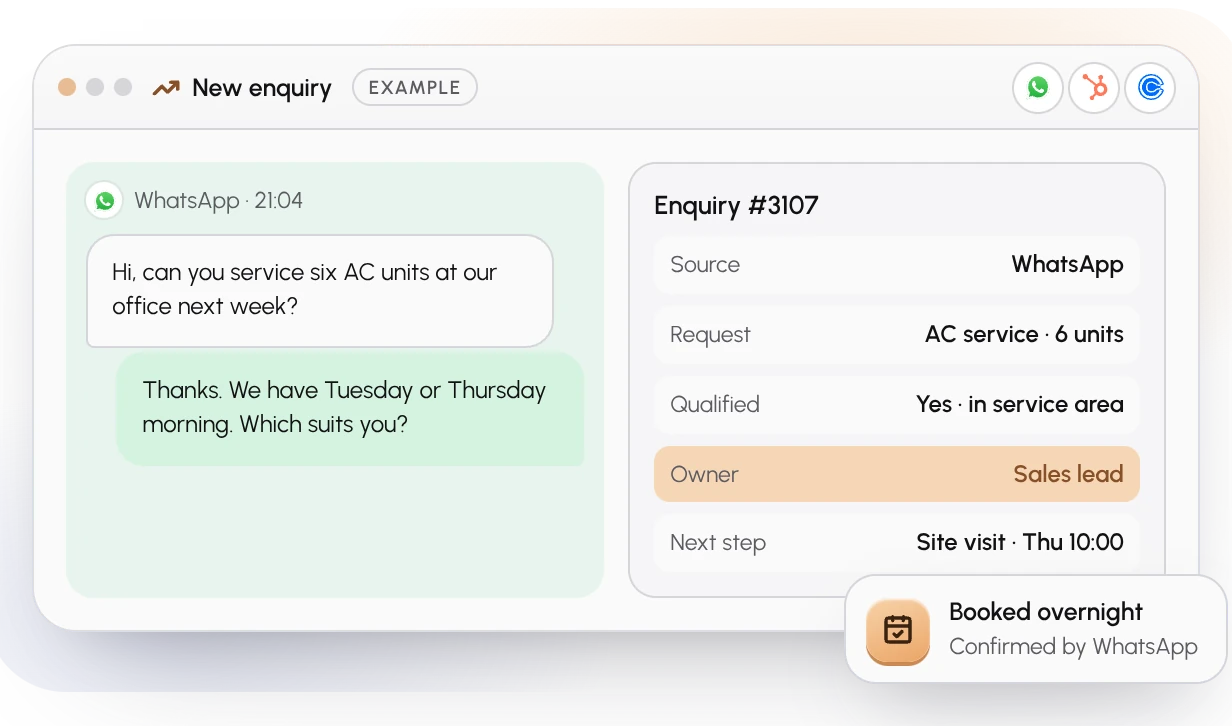
A vague flow such as 'handle new leads' is difficult to automate. 'A verified website enquiry arrives' is a trigger. 'The lead has a durable CRM record, an owner, a next action and preserved source context' is a measurable finished state.
Map states, not only tasks
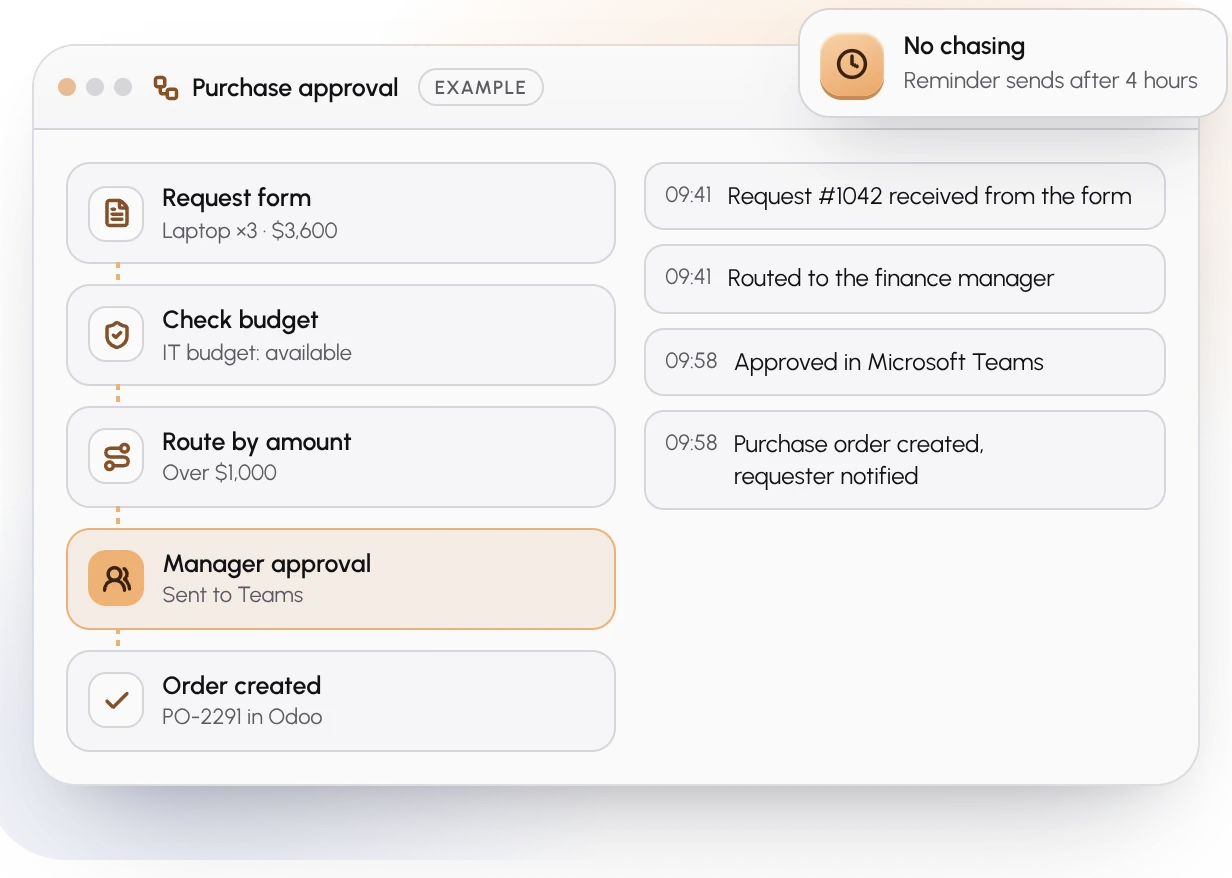
Waiting for customer, pending approval, rejected, scheduled and completed are not cosmetic labels. They determine which actions are valid next and which automation should be allowed to run.
Document the important states and the events allowed to move work between them before building workflow branches.
Separate rules from judgment
Rules are ideal for deterministic automation. Judgment may remain human or be assisted by AI with review. Mixing the two without an explicit boundary is a common source of brittle automation.
Rule: required field missing — return to owner.
Rule: amount below threshold — route to standard approval.
Judgment: interpret ambiguous customer intent.
Judgment: compare conflicting evidence and recommend a next step.
Treat exception handling as a product feature
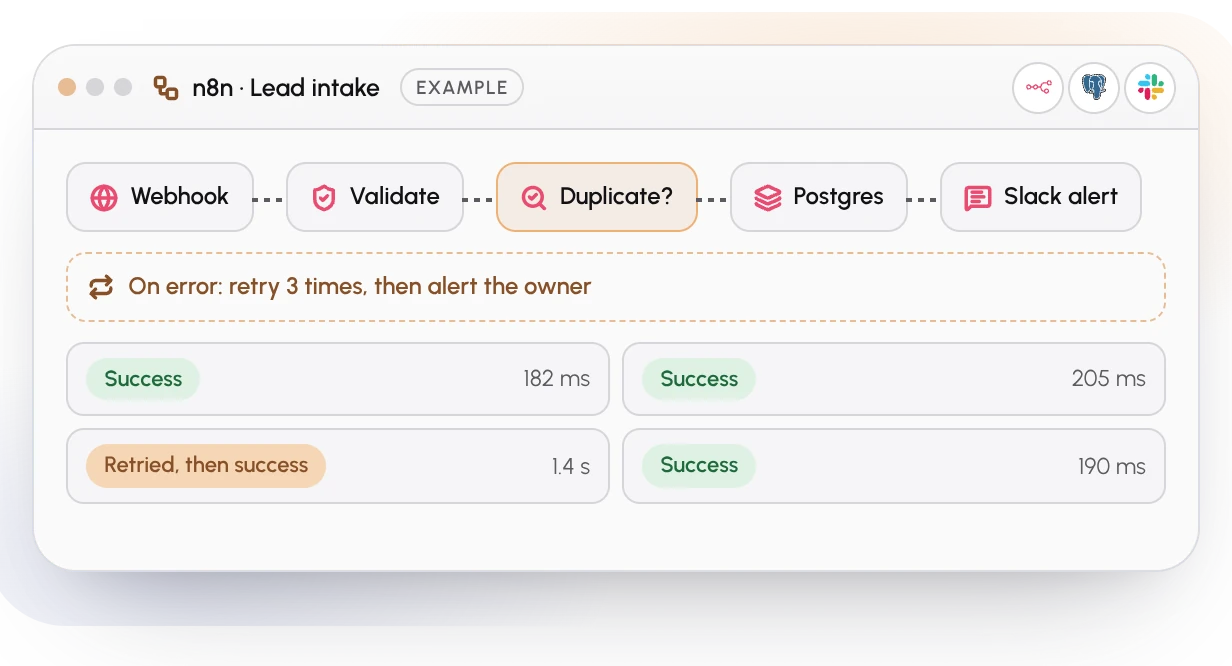
Make's error-handling model and Zapier's custom error paths both make the same operational point visible: failures need explicit behaviour. Decide what retries automatically, what waits for a person, what can safely be skipped and what must stop the workflow.
Measure one operating improvement before expanding scope
Choose a baseline such as response time, manual touches, overdue tasks, reporting hours, duplicate records or exception rate. A baseline makes it possible to prove that automation improved the workflow before adding more branches or AI.