
The practical answer
Use AI where the workflow needs interpretation, retrieval, synthesis or flexible language. Keep deterministic routing, state changes and permissions outside the model, then increase agent authority only after eval evidence supports it.
The operating question
The useful question is not whether a business can add an agent. It is which part of a workflow benefits from model judgment, which steps should remain deterministic, and what evidence is required before the system receives more authority.
Separate intelligence from orchestration
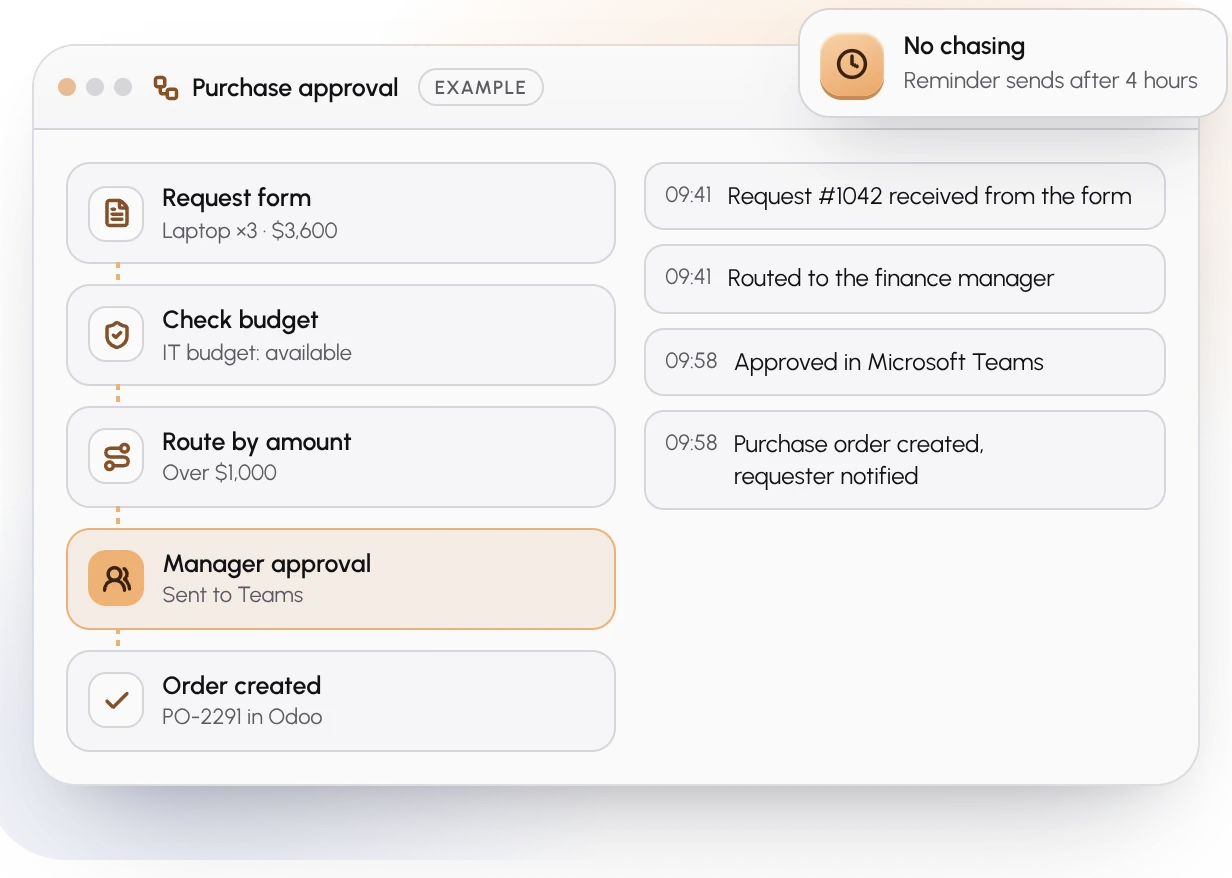
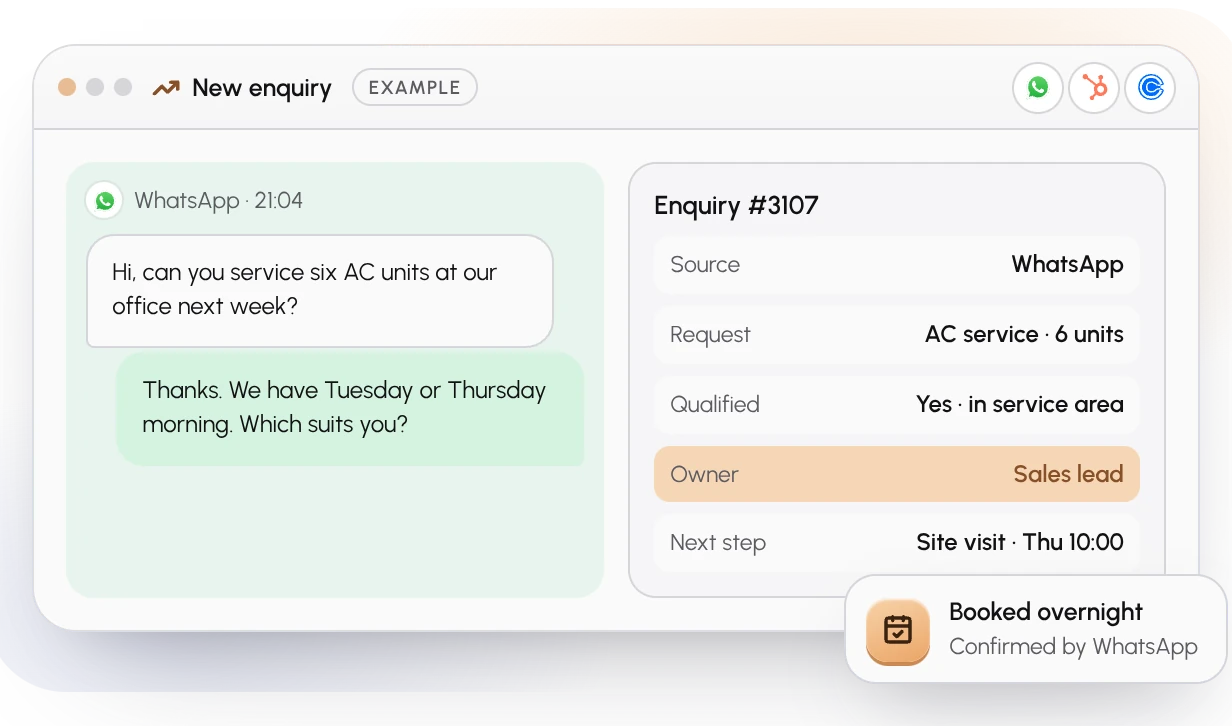
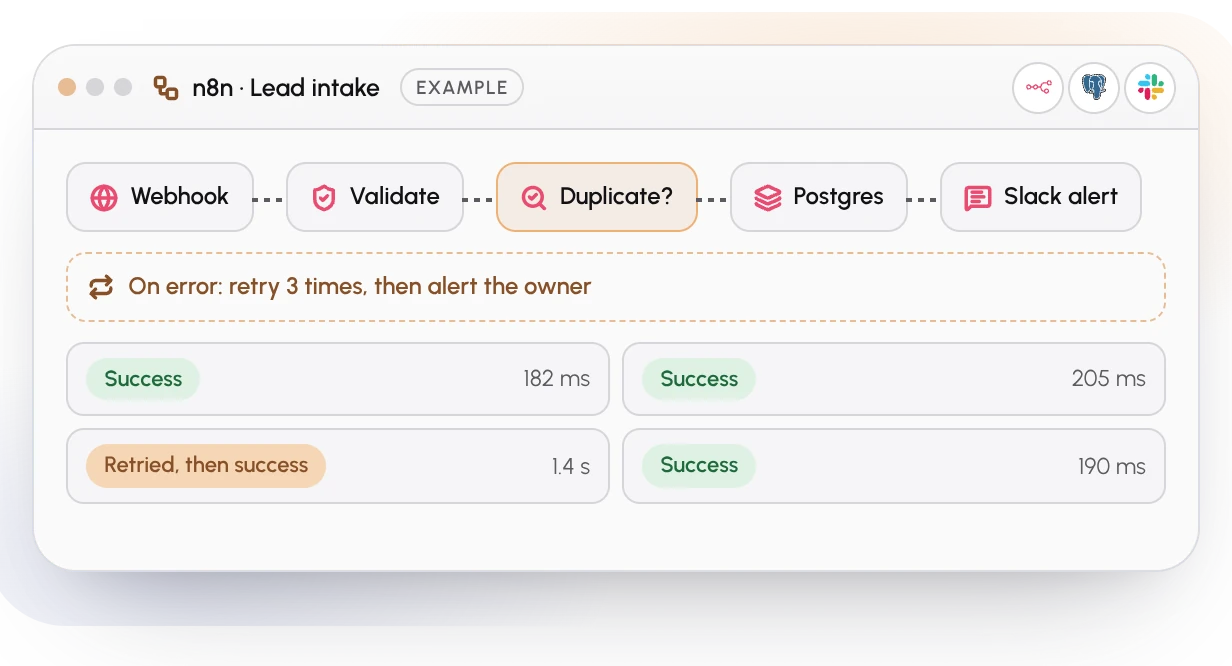
A business workflow usually mixes predictable state changes with ambiguous work. Creating a CRM task, checking whether a field exists, moving a record and sending a deterministic notification are orchestration. Reading an email, comparing a request with policy, summarizing evidence or drafting a response are interpretation-heavy tasks.
A reliable design gives the model the smallest useful reasoning job and keeps routing, permissions, retries and irreversible actions in explicit control layers around it.
Start with a bounded job and a measurable pass condition
OpenAI's current eval tooling is built around explicit testing criteria and repeatable evaluation runs. That is a useful product principle even when a different model vendor is used: define representative inputs, expected behaviour and failure cases before treating a demo as production evidence.
Known inputs and approved context sources.
A clearly defined output or action proposal.
Pass/fail criteria for important cases.
Explicit behaviour when evidence is missing or conflicting.
A human or deterministic fallback for consequential uncertainty.
Authority should rise more slowly than capability
An agent that drafts is different from an agent that sends. An agent that recommends a refund is different from one that issues it. The consequence of the action should determine permissions, confirmation requirements, logging and escalation.
NIST's Generative AI profile treats risk management as a lifecycle concern rather than a one-time launch checklist. In practice, that means the operating controls around an agent should evolve with observed failure modes and business impact.
The surrounding information system usually matters more than prompt cleverness
If policies conflict, documents are stale, permissions are unclear or customer records are incomplete, the agent inherits those weaknesses. Retrieval can improve grounding, but it does not repair source ownership or freshness by itself.
Define authoritative sources, update ownership, freshness expectations and the required behaviour when source evidence is insufficient before expanding autonomy.
Measure the workflow outcome and the model behaviour separately
Model quality can improve while the workflow still fails commercially. Track the AI-specific quality signals and the operating result: response time, handling time, review volume, escalation rate, completion quality, conversion or another outcome tied to the actual job.