

The practical answer
A form submission should immediately create durable lead state, preserve source context, assign ownership and start a response SLA. Follow-up should continue on a defined cadence only while the lead remains unanswered, and the system should measure real buyer-facing contact rather than internal task creation.
The operating question
A website lead is not converted when the form says 'success'. The commercial system succeeds when the request reaches a durable record, has an owner, receives a relevant response, stops automated follow-up when a human conversation begins, and leaves enough evidence to measure what happened.
The form should create state, not just send a notification
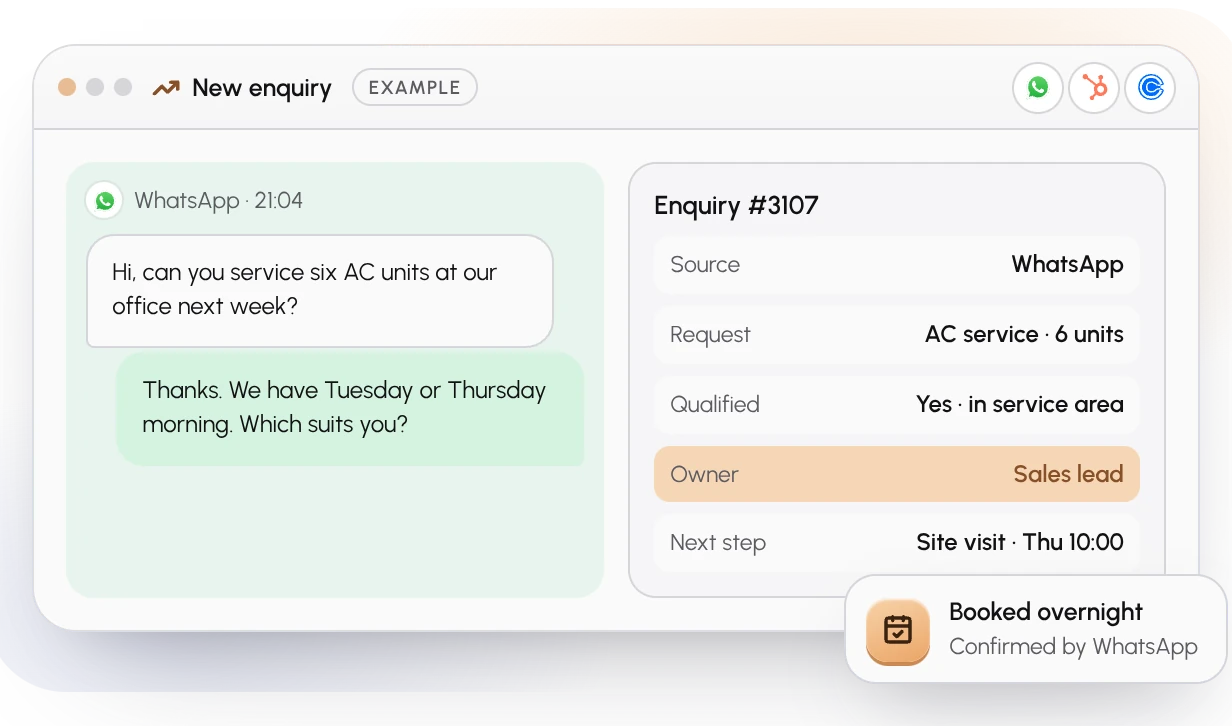
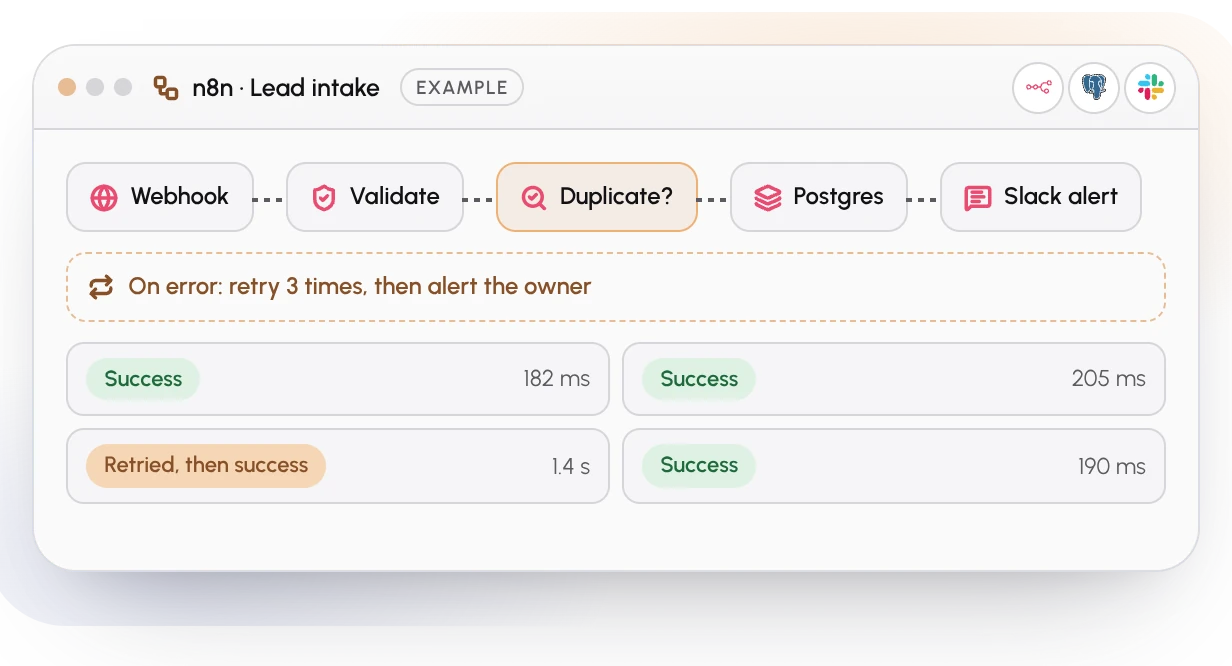
A useful submission record includes a stable lead ID, contact details, the business problem, service interest, source URL, referrer and campaign parameters. The CRM handoff should be duplicate-safe so retries do not create a second lead or rewind a record someone has already reviewed.
That state becomes the source for ownership, follow-up, attribution and later reporting. An email notification alone cannot do that reliably.
Start the response clock when the buyer raises their hand
HubSpot defines lead response time around how quickly sales follows up after a prospect expresses interest, and its current guidance emphasizes automated assignment and follow-up to reduce coordination delays. Internally assigning a task is useful, but it is not the same as a buyer-facing response.
Measure the gap from verified form submission to the first real outbound touch, then track whether it happened inside the SLA, late, or not at all.
Use a short, context-aware follow-up sequence
The first response should acknowledge the actual problem the visitor described and give one useful next move. If there is no reply, the next follow-up should add clarity rather than repeat the same sentence. A final follow-up can close the loop without creating an endless nurture sequence.
Immediate: acknowledgement plus confirmation that the request is recorded.
Within the response SLA: human review and a context-aware reply.
Around 24 hours if unanswered: one helpful clarification or relevant next step.
Around 72 hours if unanswered: concise close-the-loop follow-up.
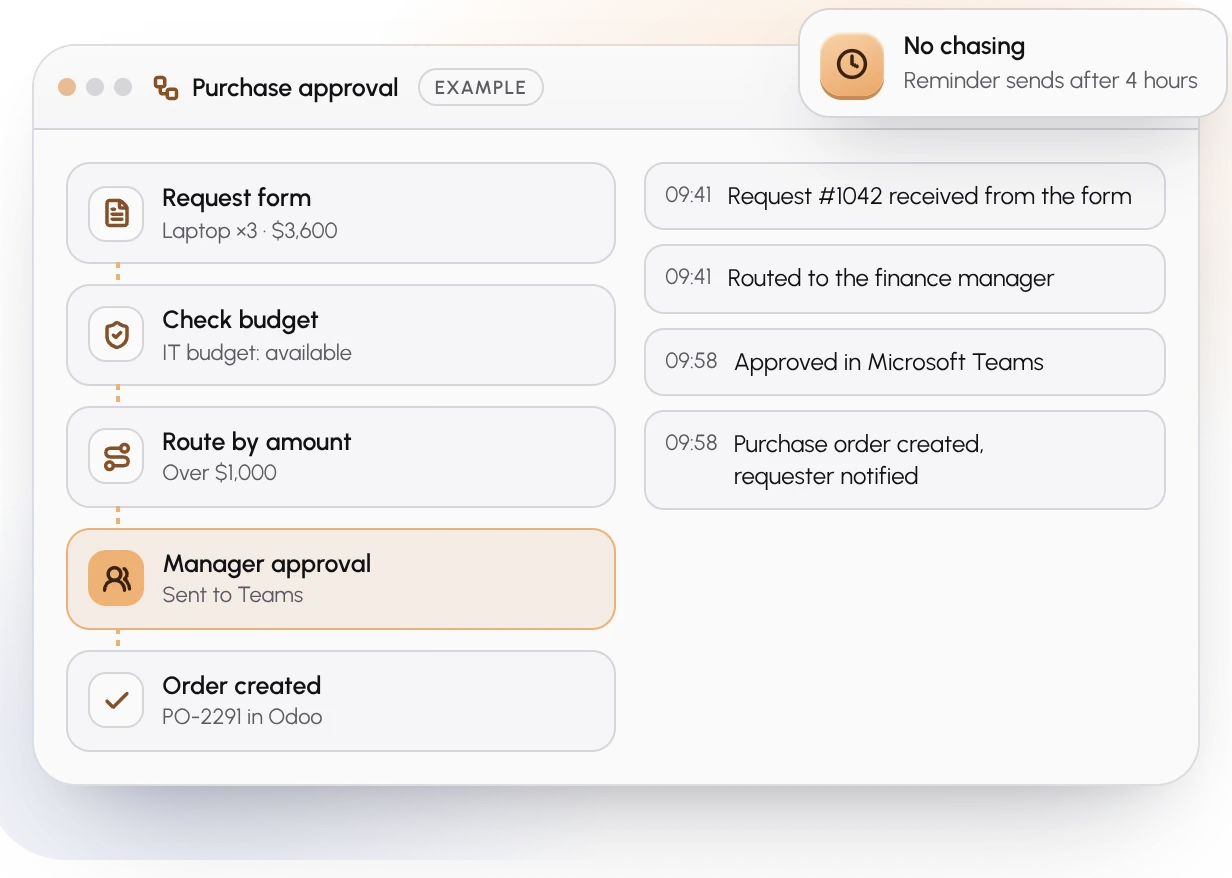
Stop the sequence immediately when a real reply or meeting state is recorded.
Different intent should produce different messaging
HubSpot's 2026 prospecting guidance describes an automated handoff where a form or high-intent action can enrich the contact, enroll an appropriate sequence and notify the assigned representative. The important design point is segmentation by intent: a project request should not receive the same message as a low-intent content download.
For a services business, the form already contains useful segmentation signals such as service interest, problem, timeline and source page. Use them to draft the first reply and select the right owner or follow-up path.
Measure the operating loop, not email vanity metrics
Useful metrics include response time, percentage contacted inside SLA, untouched enquiries, follow-up completion, reply rate, meeting conversion and pipeline movement. These reveal whether automation is reducing missed handoffs rather than simply sending more messages.