
The practical answer
A trustworthy dashboard starts with a decision, a written metric definition and an accountable source pipeline. Charts come after the team agrees on what each number means, where it comes from, how fresh it must be and what action should follow when it moves.
The operating question
Dashboard trust is established before visual design. Source systems can disagree on revenue, metric ownership can be unclear and updates can arrive at different times. A polished chart cannot repair an undefined metric or an unreliable pipeline.
Define the decision before the metric
'Show all our data' is not a decision. 'Which opportunities are likely to miss the month?' or 'Which service category is creating repeat visits?' is. Start with recurring management questions, then identify the minimum metrics and dimensions required to answer them.
Metric definitions need owners
Terms such as active customer, qualified lead, gross margin or completed job sound obvious until different teams calculate them differently. Write the source, formula, inclusion rules, exclusions, refresh frequency and owner for every metric that drives a decision.
The pipeline behind the dashboard is part of the product
Those controls determine whether the number is complete and timely when an important decision is made.
Source systems and extraction method.
Cleaning and normalization rules.
Join keys and entity definitions.
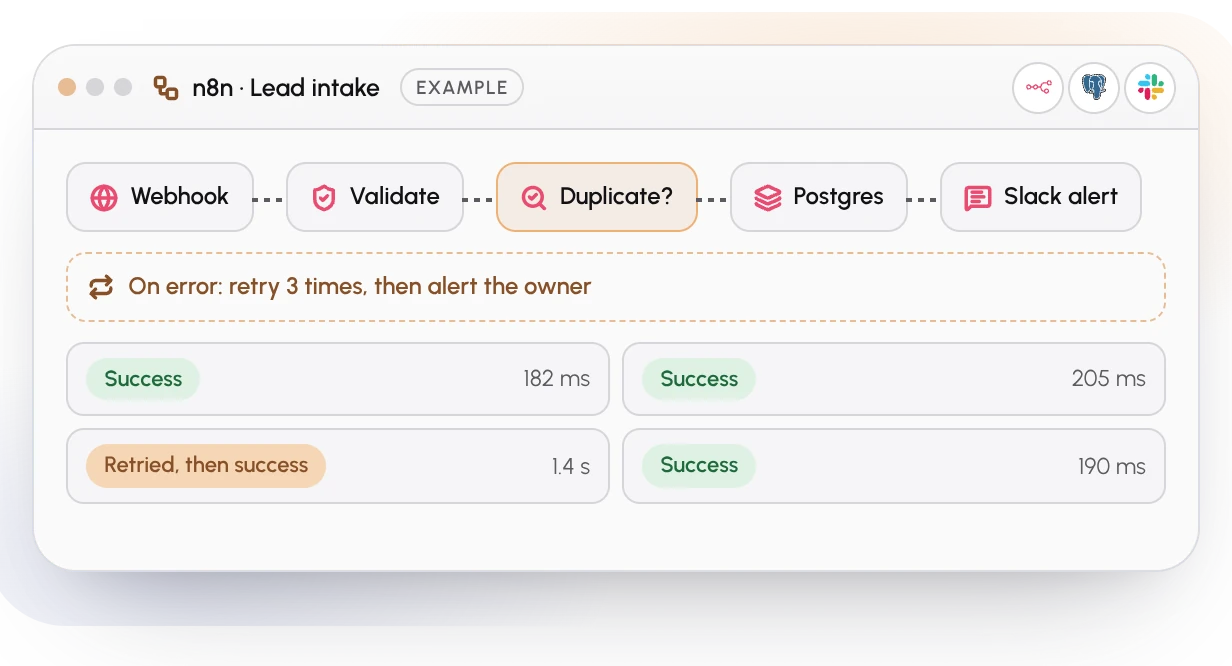
Refresh schedule and failure alerts.
Historical snapshots where trend analysis requires them.
Access control for sensitive metrics.
Make exceptions visible
Operators rarely need to stare at every normal record. Useful dashboards surface unusual movement, missed targets, aging work, outliers and missing information, then make the underlying records easy to inspect.
Good data foundations compound across AI and automation
Clean identifiers, consistent definitions and reliable pipelines create leverage beyond reporting. The same foundation makes CRM automation safer, segmentation stronger and AI systems easier to ground in trustworthy business context.